
Blog
Unpacking This Year’s Saltmarsh Mosquito Explosion
Keira J. Lucas, PhD
Deputy Executive Director
In July 1988, Collier County rancher William Langford discovered three of his cows dead near a stretch of fence, seemingly untouched and uninjured, likely victims of a lightning strike, he thought. But the veterinarian’s findings were far stranger: the animals had died from massive blood loss. There were no signs of disease, no wounds, no predators, no struggle – exsanguinated. Their bodies were riddled with mosquito bites, and clouds of saltmarsh mosquitoes had fed on them so relentlessly, they were drained of blood (Addison and Ritchie, 1993).
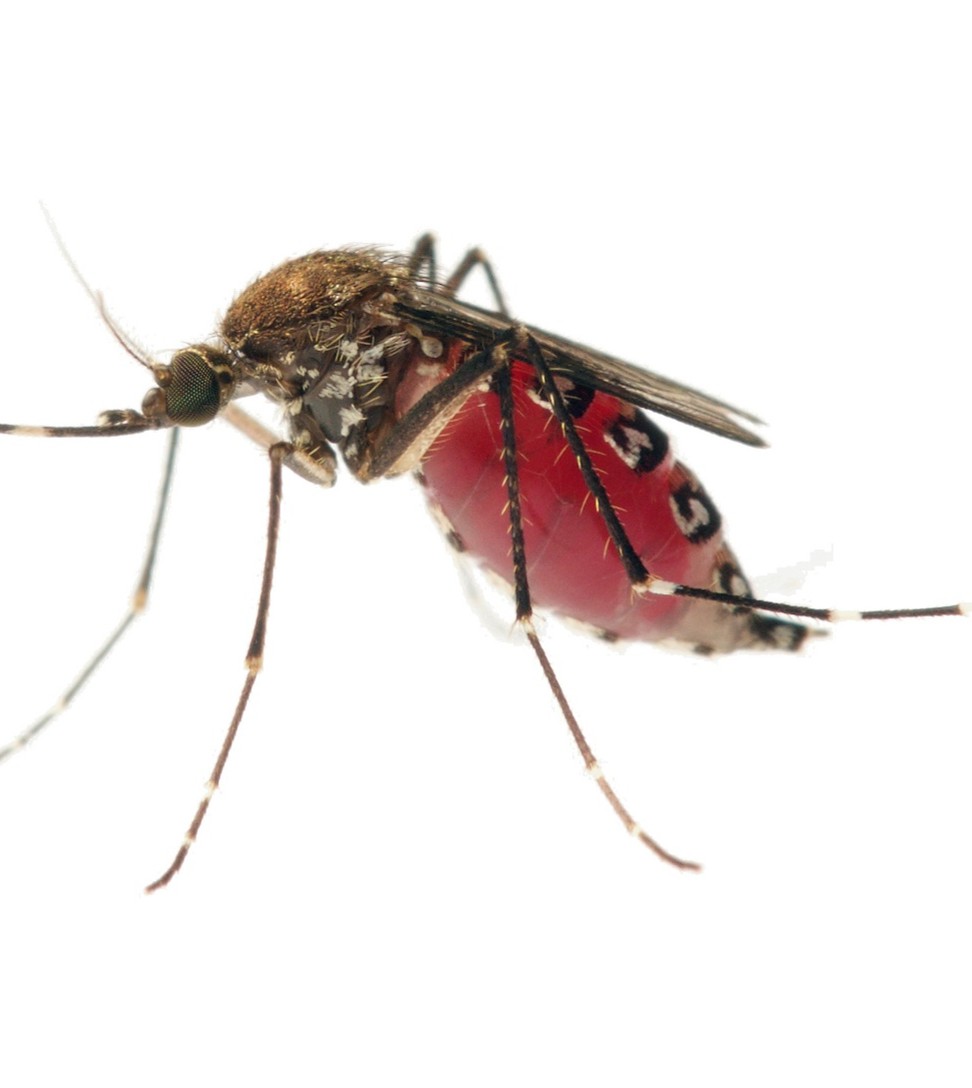
The black saltmarsh mosquito, Aedes taeniorhynchus (affectionately called “taenies” by entomologists) is a notorious pest along Florida’s coast. These mosquitoes don’t need standing water to lay eggs; instead, they target the upper reaches of mangrove swamps and salt marshes. Their eggs sit dormant, waiting. When high tides or heavy rains flood the area, the eggs hatch all at once, unleashing swarms of hungry mosquitoes that make life miserable.
So miserable, in fact, that saltmarsh mosquitoes were the driving force behind the creation of the Collier Mosquito Control District back in 1950. These relentless biters made life so unbearable that residents demanded a solution, and CMCD was born. Since then, the District has been working year-round not only to protect the community from mosquito-borne diseases, but to also make life in Collier County a little more livable by keeping the swarms of saltmarsh mosquitoes at bay.
Why are they so bad this year?
This summer’s mosquito explosion wasn’t just bad luck, it was a perfect storm of timing, weather, and biology. After an unusually dry winter, the stage was set for a major outbreak. Why? Because when you go a long time without flooding, saltmarsh mosquito eggs start piling up in the dry marshes. These eggs can sit there for months, even years, just waiting for water.
Then came the rain. A storm in early May dropped a couple of inches over our coastal region. It may not have seemed like much, but it was just enough to hatch what’s called a seed brood: the first wave of adult mosquitoes from those dormant eggs. Those mosquitoes then laid fresh eggs that sat in the soil, waiting.
Come early June, the real rain began. That rain flooded the marshes again, hatching not only the new eggs laid in May but also old ones from the previous year. That’s when things really took off. Trillions of saltmarsh mosquitoes took to the skies, looking for a blood meal.
And it wasn’t just local. Saltmarsh mosquitoes are strong fliers. They can ride the wind up to 40 miles from where they hatch. So, when June brought steady southeastern winds, it carried mosquitoes from Rookery Bay, Ten Thousand Islands, even the Everglades, right into Collier’s communities.
A dry winter, just a sprinkle of rain in the spring, a soaking June, and some unlucky wind patterns all came together at once. And the mosquitoes showed up right on cue.
So, what can CMCD do about this?
Nowhere have saltmarsh mosquitoes been more closely studied than in Collier County. With its vast mangrove swamps and tidal marshes in our state and federal conservation lands, the region offers the perfect environment for these mosquitoes. Over decades, researchers have tracked their life cycles, habitat, flight patterns, explosive population booms (and crashes) and best ways to control them, making Collier County a central hub for understanding one of Florida’s most relentless mosquito species. (See references – there’s just too many to list!)
As spring arrives, CMCD gets to work by taking to the skies. Using helicopters, the District treats local mangrove swamps with an environmentally friendly larvicide made from naturally occurring soil bacteria, called Bti for short. This treatment stretches from Gordon Pass all the way up to the Collier-Lee County line. In most years, these early-season treatments, known as “pre-treatments,” are usually enough to stop saltmarsh mosquitoes before they hatch and become a problem.
But in areas like East Naples, Marco Island, and Port of the Islands, it’s a different story. Much of the surrounding land is state or federally protected, and CMCD isn’t allowed to treat those areas in advance. That means crews often have to wait until the mosquitoes hatch and become biting adults, then respond with adulticide treatments to knock down the swarms after the fact. Thankfully, in typical years, these saltmarsh mosquito swarms are short-lived and subside quickly once treatments are applied.
In years when saltmarsh mosquito populations explode, all bets are off! Trillions of these aggressive biters come pouring into our neighborhoods, riding the wind from nearby state and federally protected lands. The swarms are overwhelming and relentless, making life miserable for residents. It’s especially tough for CMCD field technicians, who brave the worst of it. Mosquito traps can collect over 60,000 mosquitoes in a single night (our record being 300,000 mosquitoes), and some areas see more than 150 mosquitoes landing on a person every single minute. It’s not for the faint of heart.
And our response? Repeated larvicide applications in local areas where mosquitoes are actively breeding, paired with ongoing adulticide treatments to knock down the current wave. Adulticide treatments only affect mosquitoes that are out and about at the time of the treatment. But because new ones are constantly coming out of the marshes each day, it might seem like the treatments aren’t working. In reality, it’s a constant cycle and we’re working hard to stay ahead of it. Our surveillance data, including mosquito trap counts and field reports, show that these treatments are providing relief, even if it’s only for a short time. It confirms what many residents are noticing too, for a lot of people, it means finally being able to step outside and enjoy their backyard again.
References
Addison DS, Ritchie SA. (1993) Cattle fatalities from prolonged exposure to Aedes taeniorhynchus in Southwest Florida. JSTOR. 56: 65-69.
Klein SL, Lemire GF. (1998) Evaluation of attractant-baited traps/targets for mosquito management on Key Island, Florida, USA. J Vector Ecol. 23: 171-185.
Klein DL, Lemire GF. (1995) Field evaluation of heat as an added attractant to traps baited with carbon dioxide and octenol for Aedes taeniorhynchus. J Am Mosq Control Assoc. 11: 454-456.
Lucas KJ, Babcock E, Bales RB. (2023). Baseline susceptibility and effectiveness of adulticides to local Aedes taeniorhynchus from Collier County, Florida. J Am Mosq Control Assoc. 39: 212-15.
Lucas KJ, Brake P, Bales RB, King R, McKinney A, Laidlaw-Bell C, Linn P, Ritchie SA. (2021) New life for old ideas: Combining modern technology with eggshell sampling techniques to identify saltmarsh mosquito production sites in Collier County, Florida. Wingbeats. Spring 2021 Issue.
Lucas KJ, Watkins A, Phillips N, Appazatto DJ, Linn P. (2019) The impact of Hurricane Irma on population density of the Black Salt Marsh Mosquito, Aedes taeniorhynchus (Wiedemann), in Collier County, Florida. J Am Mosq Control Assoc. 35(1):71–74.
Ritchie SA, Montague CL. (1995) Simulated populations of the black salt marsh mosquito (Aedes taeniorhynchus) in a Florida mangrove forest. Ecological Modeling. 77: 123-141.
Ritchie SA, Laidlaw-Bell C. (1994) Do fish repel oviposition by Aedes taeniorhynchus? J Am Mosq Control Assoc. 10(3): 380-384.
Ritchie SA. (1993) Application of radar rainfall estimates for surveillance of Aedes taeniorhynchus larvae. J Am Mosq Control Assoc. 9: 228-231.
Ritchie SA, Addison DS. (1992) Oviposition Preferences of Aedes taeniorhynchus (Diptera: Culicidae) in Florida Mangrove Forests. Envir Entomol. 21: 737-744.
Ritchie SA, Johnson ES. (1991) Aedes taeniorhynchus (Diptera: Culicidae) Oviposition Patterns in a Florida Mangrove Forest. J Med Entomol. 28: 496-500.
Ritchie SA, Johnson ES. (1991) Distribution and Sampling of Aedes taeniorhynchus (Diptera: Culicidae) Eggs in a Florida Mangrove Forest. J Med Entomol. 28: 270-274.
Ritchie SA, Addison DS. (1991) Collection and separation of Aedes taeniorhynchus eggshells from mangrove soil. J Am Mosq Assoc. 7: 113-115.
Ritchie SA. (1990) A simulation model of water depth in mangrove basin forests. J Am Mosq Control Assoc. 6: 213-222.
Ritchie SA, Johnson ES. (1990) Use of sodium hypochlorite to detect aedine mosquito eggs in mangrove soils and insect feces. J Am Mosq Control Assoc. 5: 612-613.
Ritchie SA. (1985) Record winter rains and the minimal populations of Aedes taeniorhynchus (Wiedemann): cause and effect? J Florida Anti-Mosq Assoc. 55:14-21.
Steele G, Lucas K, Li S. (2025) Evaluation of a bifenthrin-based barrier treatment for controlling Aedes taeniorhynchus populations on an isolated barrier island in Collier County Florida. J Am Mosq Control Assoc.