Blog
Data-Driven Results: How CMCD Makes Treatment Decisions
Data-Driven Results: How CMCD Makes Treatment Decisions
Jonathon Little, MBA
Director of External Affairs
You’re walking your dog or playing outside with your kids when you being to hear that familiar buzzing sound. Later that night you hear another buzzing sound, but this time it is a Collier Mosquito Control District (the District) airplane sent to provide relief from pesky mosquitoes. You might think to yourself, “How did they know earlier today we were swatting mosquitoes away by the dozen?”
The District tracks mosquitoes in many ways. Some methods are high-tech, such as drones, while other methods like landing rate counts and mosquito traps have been tried and true for decades. The District employs a team of field technicians who conduct mosquito inspections daily.
To perform a landing rate count, a field technician will stand outside for an allotted amount of time and count how many mosquitoes land on them. Yes, it is as simple as it sounds but it provides our operations team with valuable information about the mosquito situation and their biting activity in our community.
Mosquito traps add another layer of information by helping us measure mosquito populations and identify which species are most abundant in different areas. Since each mosquito species has its own habitat and responds differently to treatments, this data is critical for choosing the right control method. In addition, we use the trapped mosquitoes to monitor mosquito-borne diseases, giving us an early warning system to protect public health.
There is a misconception that the District treats mosquitoes indiscriminately or at random. This couldn’t be further from the truth! In fact, the Florida Department of Agriculture and Consumer Services (FDACS) regulates mosquito control, and we must show a need for every treatment we perform. Treatments are not done on a set schedule, but only when field data shows excessive levels of mosquitoes and the need for treatment.
That’s why all the information we collect through traps, landing rate counts, inspections and disease monitoring is so important. It helps us determine not only if a treatment is needed but also what the best method. With more than 50 different mosquito species in Collier County, each with its own habitat and level of susceptibility to control measures, there is no “one-size-fits-all” approach. Instead, we target the right species with the right method at the right time. By using this science-based approach, we ensure treatments are as effective, efficient and environmentally responsible as possible.
As part of the District’s integrated pest management plan, we also treat extensively for mosquito larvae. Like with adult mosquitoes, we use field data and inspections to make these treatment decisions. Field technicians have specialized dipper cups to check standing water. For areas with dense woods and swamplands, drones can check for the presence of water. These techniques ensure that treatment materials are being used where they can most effectively prevent mosquitoes from developing into adults.
While field technicians have assigned zones where they perform data collection, residents who have mosquito problems at their homes can request a field technician visit on our website at https://cmcd.org/report-mosquitoes/. Oftentimes, residents call requesting treatment because they are experiencing a lot of mosquitoes in their yard when they are breeding their own problem. Field technicians can identify potential breeding sites and educate homeowners how to prevent mosquitoes from taking up residence on their property.
In addition to home inspections, field technicians can also collect data from around your neighborhood. If they find a more widespread issue that isn’t the result of localized breeding on a couple of properties, this data can then be used to schedule a mosquito treatment.
As mentioned previously, there is no set schedule for mosquito control treatments. However, residents can sign up for text, phone or email notifications on our website at https://cmcd.org/treatment-notifications/ and search for treats by date and location at www.cmcd.org/map. These are great resources to stay up to date on our treatment activities.
Data driven treatments are key to the District’s operations. It ensures that we are treating where mosquitoes are to help get the most effective results while responsibly using the resources we have available. This approach, combined with ultra-low volume treatments also helps us limit the risk to the environment and non-target species.
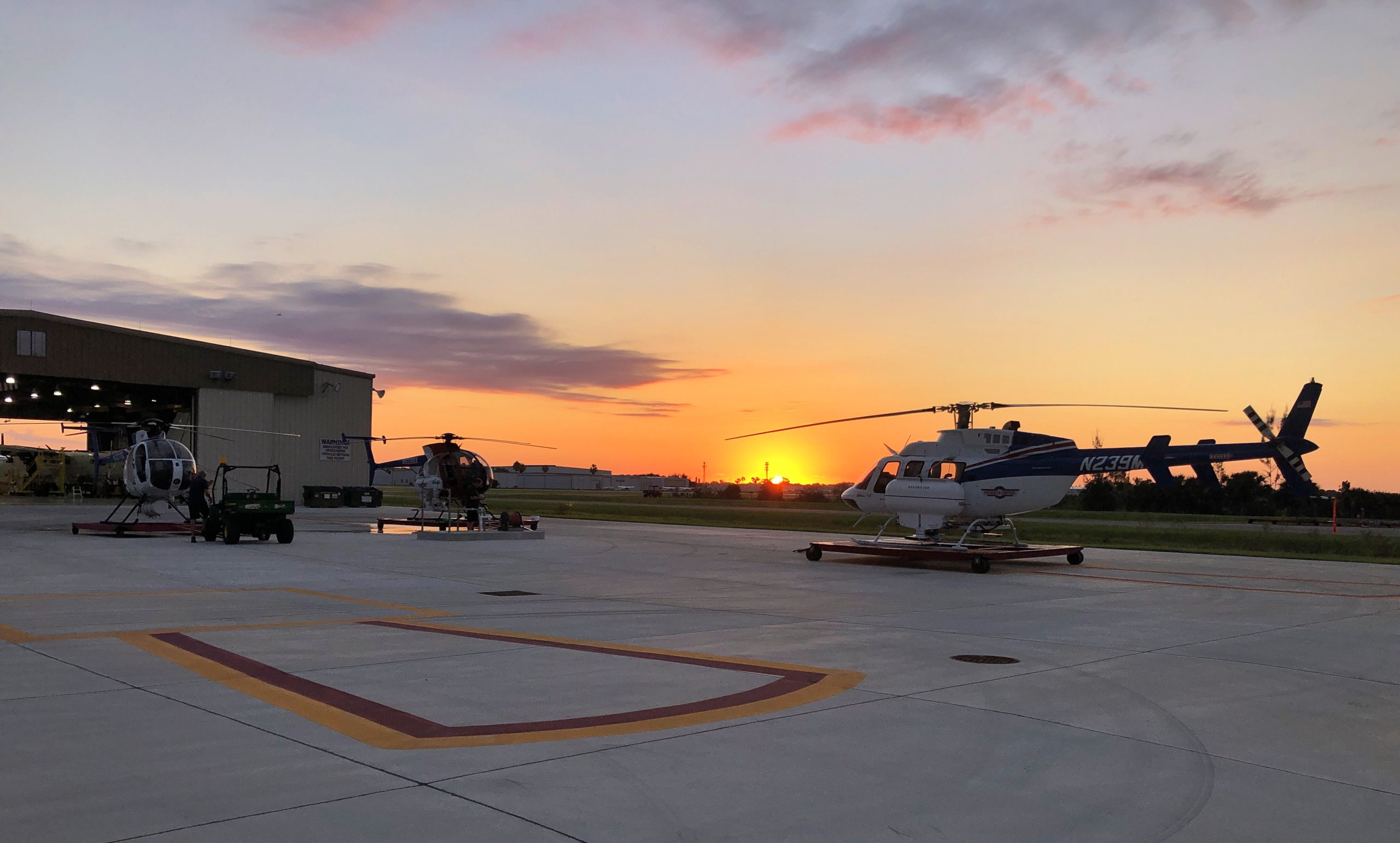
So, the next time you hear a mosquito airplane or helicopter in your neighborhood, that means earlier that week there were boots on the ground collecting data and verifying the need for treatment.
—
Jonathon Little is the director of external affairs for the Collier Mosquito Control District. He Joined the District in 2023 and has more than 15 years of experience in communications and public affairs in Florida.