
Blog
Aquatic Plants: The Hidden Source of Mosquito Swarms
Aquatic Plants: The Hidden Source of Mosquito Swarms
By, Keira J Lucas, PhD
You’re relaxing on your patio, soaking in the evening sun, when suddenly the horizon starts… buzzing. Out of the cypress swamps and agricultural fields comes a full-blown mosquito invasion like they’ve got a dinner reservation and you’re the menu. For the next 30 minutes it’s absolute chaos: you’re swatting, your dog’s seeking refuge, your neighbors vanish indoors mid-conversation, and these mosquitoes? Aggressive and deeply committed to their mission. Then just as fast as they arrived, they’re gone, leaving behind about 300 itchy reminders that you were, in fact, the main course.
Those were Mansonia mosquitoes, and they are relentless.
So, what makes them different?
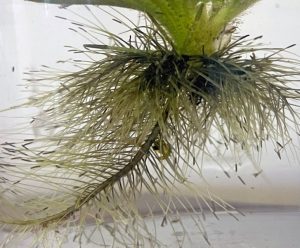
Mansonia mosquitoes are tropical species that depend on certain aquatic plants, like water lettuce and water hyacinth, for their aquatic stages (Slaff and Haefner, 1985). Mansonia larvae have a specialized breathing device, known as a siphon, that attaches to the underwater root system of these plants to breathe. Attaching to the root system also keeps them safe from predators, such as mosquitofish and dragonfly nymphs. As adults, the females are known for their painful, persistent bites and their ability to fly several miles from where they hatch. They’re most active around dusk and dawn, especially at sunset. While mostly a nuisance in Florida, they can also spread heartworm to pets (Bemrick and Sandholm, 1966) and appear in such large numbers that being outside becomes unbearable without mosquito control interventions.
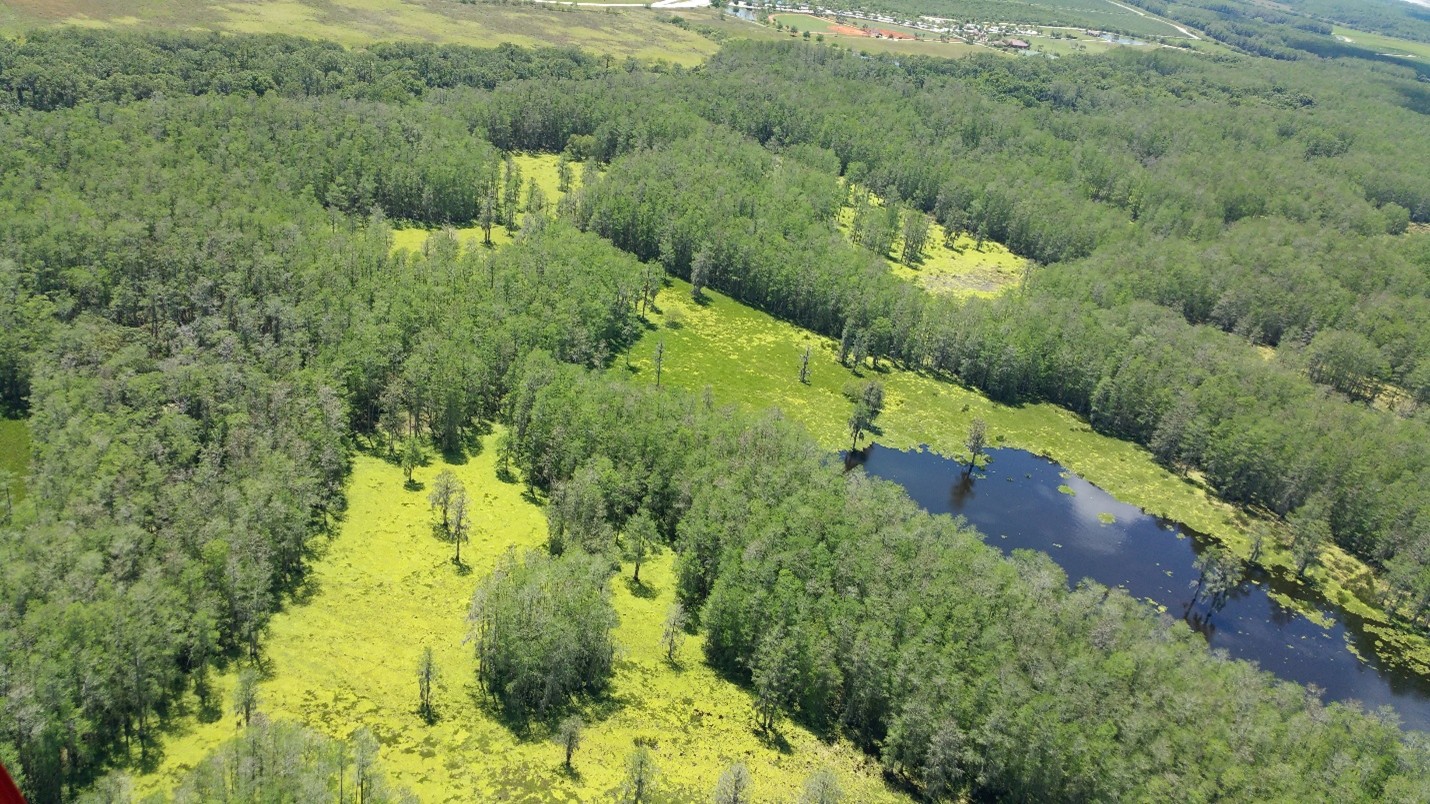
In Collier County, Mansonia mosquitoes are most common anyw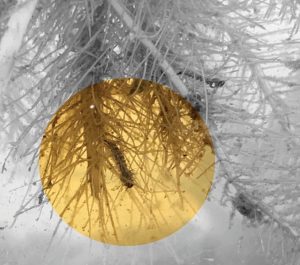 here these aquatic plants are found. Our research shows a clear pattern: if you see water lettuce or water hyacinth, Mansonia mosquitoes are nearby. To stay ahead of the problem, District staff use drones and aerial surveys to map where these plants are growing. They thrive in permanent bodies of water (such as lakes, ponds, canals, swamps, and freshwater marshes) dense with water lettuce and water hyacinth (Rojas-Araya et al, 2021). These mosquitoes are also commonly found in agricultural irrigation and drainage ditches containing the host plants, particularly in areas like Ave Maria and Immokalee, as well as parts of South Naples. Their numbers tend to peak in late summer and early fall when these plants thrive (Rojas-Araya et al, 2021), but in Southwest Florida, they can be present year-round.
Because of their close association with dense aquatic vegetation, finding Mansonia larvae can be challenging and labor intensive. Instead, scientists often use specialized tools called emergence traps to measure how many adult mosquitoes are coming out of these plant-filled areas. In fact, scientists at CMCD developed a new emergence trap method to survey for Mansonia mosquitoes to get a better idea of how many mosquitoes emerge from an area (Bales et al. 2022, Brake et al. 2022). Using these methods, District researchers have documented some sites producing as much as 225,000 mosquitoes per acre per day (Bales et al. 2022), and, in some years, areas around Ave Maria have shown production as high as 1.5 million mosquitoes per acre per day!
How does the District target Mansonia?
The most effective way to reduce Mansonia mosquitoes is through an integrated pest management approach that targets the plants, larvae, and adults (Rojas-Araya et al, 2021). In Collier County, the District uses this multi-step strategy to keep Manson
ia populations under control. Farm managers are encouraged to remove invasive aquatic vegetation from irrigation and drainage ditches to reduce breeding habitat and restore waterflow. The District also applies organic, microbial larvicides—designed to specifically target mosquito larvae without impacting other wildlife—in areas containing water lettuce and water hyacinth, using helicopters and drones for precise application. When adult mosquito populations increase, targeted treatments are conducted during peak activity periods, typically around sunset, or by using products that flush mosquitoes from their resting sites at night.
In areas such as Ave Maria, residents may notice increased helicopter applications using Merus 3.0, an organic adulticide derived from chrysanthemum flowers. These treatments are carefully timed around sunset, when mosquitoes begin leaving their resting sites, and are focused on areas where Mansonia are known to shelter. The goal is
to reduce mosquito numbers before they move into nearby neighborhoods. Residents may also see nighttime treatments using Duet HD, a dual-action product designed to encourage mosquitoes to leave their resting areas. This increases the likelihood that they come into contact with fine airborne droplets, making the treatment more effective.
Understanding Mansonia mosquitoes starts with recognizing the connection between water, aquatic vegetation, and mosquito production. By targeting these aquatic plants and using science-driven control methods, the District works to reduce mosquitoes in your backyard. While these aggressive biters may seem to appear out of nowhere, their presence is anything but random. With continued surveillance, research, and community cooperation, even the most intense swarms can be managed, so you can get back to enjoying your evenings outdoors without becoming the main course.
For more information about our program or to learn more about the science behind mosquito control, please visit us at www.cmcd.org.
References
Bales RB, Brake P, Weiss A, Lucas KJ. (2022) Evaluation of emergence trap design for the collection of Mansonia mosquitoes associated with Pistia stratiotes. J Florida Mosq Control Assoc.
Bemrick WJ and Sandholm HA. 1966. Aedes vexans and other potential mosquito vectors of Dirofilaria immitis in Minnesota. Journal of Parasitology. 52(4): 762- 767.
Brake PB, Weiss A, Bales RB, Heinig R, Lucas KJ. (2022) Drone vs. Gator: Development of a new drone deployable emergence trap. Wingbeats. Summer 2022 Issue.
Rojas-Araya D, Mathias D, Burkett-Cadena N. 2021. A mosquito Mansonia titillans (Walker) (Insecta: Diptera: Culicidae: Culicinae: Mansoniini) [Online] Available from: https://edis.ifas.ufl.edu/publication/IN1314 [Accessed 15 April 2026].
Slaff M, Haefner JD. 1985. Seasonal and spatial distribution of Mansonia dyari, Mansonia titillans, and Coquillettidia perturbans (Diptera: Culicidae) in the central Florida, USA, phosphate region. J Med Entomol. 22(6):624-629.