
Blog
The Mosquito Bucket Challenge: Putting a Viral Trend Under the Microscope
The Mosquito Bucket Challenge: Putting a Viral Trend Under the Microscope
Andrea McKinney
Public Outreach and Education Specialist
If you’ve spent any time on social media this summer, then you’ve probably come across the so-called “mosquito bucket challenge” or “mosquito bucket of doom.” Promoted as a simple DIY solution for those annoying mosquitoes in your backyard, this trend has taken off, with buckets popping up in gardens throughout the country. It is the latest bucket challenge since the Ice Bucket Challenge, but this one won’t cool you off. The idea sounds simple enough: turn a 5-gallon bucket into a trap that lures female mosquitoes to lay eggs, then kill the larvae before they become flying adult mosquitoes. But how effective is it really? Let’s take a closer look.
What is the Mosquito Bucket Challenge?
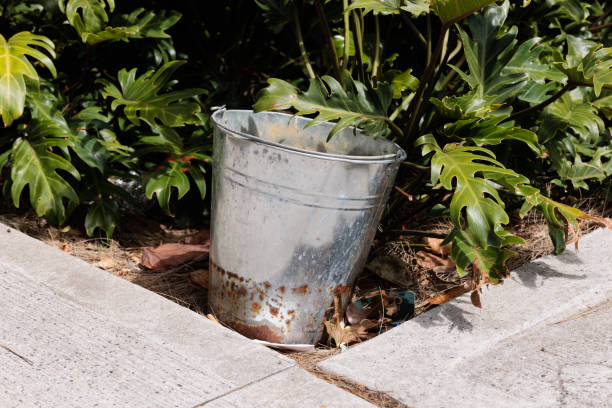
The method is pretty simple. A homeowner fills a 5-gallon bucket with water, tosses in some grass clippings to make it smell “swampy,” and adds in some mosquito bits or a mosquito dunk (or both for good measure, why not?). These products contain Bacillus thuringiensis israelensis (Bti), a naturally occurring bacterium that kills mosquito larvae but is safe for people, pets, and wildlife. Fun fact: Bti only targets mosquito larvae and a few related flies, but leaves butterflies, bees, and dragonflies completely unbothered. Buckets are then placed in shady areas around the yard or garden. The theory is that female mosquitoes will be drawn to this ideal habitat to lay their eggs, and the Bti will prevent any new adult mosquitoes from emerging when her eggs hatch.
It sounds straightforward, but to really understand why people are giving it a try, we need to look at what’s driving its popularity.
Why is This Trending?
It’s no surprise this trend has gone viral. No one likes mosquitoes. Their buzzing is annoying, their bites itch, and they spread diseases. For homeowners looking for simple and safe ways to reduce mosquitoes around their property, the bucket seems like an easy solution. Those who are skeptical of pesticides used in mosquito control like the idea of a “greener” alternative. Because Bti is considered safe for children and pets, the bucket feels low risk, although it is recommended that the bucket is covered to prevent accidental ingestion of the water or drowning. Add in that it appears as a low-cost and low-effort way to fight mosquitoes at home, it’s easy to believe you’re outsmarting mosquitoes with just a bucket, some grass, and a dunk.
Unfortunately, the whole concept of the “mosquito bucket of doom” shows a lack of understanding of mosquito biology or diversity. So, before we call this a backyard miracle, it’s important to remember how mosquitoes live and reproduce, and the fact that mosquitoes are not all the same.
A Quick Mosquito Biology Lesson
Male and female mosquitoes both rely on nectar for their food source, but only the females bite. And, no, it’s not because she’s mean. She needs nutrients like protein and iron from a blood meal to develop her eggs. That means that any mosquito lured to your bucket has already bitten someone (or something).
After blood feeding and resting for a couple days, she searches for a water source to lay her eggs. But there’s a catch. The species of mosquitoes that your bucket is targeting, the Aedes aegypti and Aedes albopictus mosquitoes, don’t “lay all their eggs in one basket.” Instead, she will lay small clusters of eggs across several sites, which is something called ‘skip oviposition’. So, some eggs may go in your Bucket of Doom, but others may go into a bird bath, some in a flowerpot, and some in that forgotten toy in the backyard.
Under normal circumstances, here’s how things go: once a mosquito egg hatches, the larva spends its days happily snacking on whatever organic goodies are floating in the water like algae and bits of decaying plants. After a few days of eating and growing, it moves on to the pupal stage and then emerges as a full-fledged adult mosquito, ready to buzz, bite, and annoy.
That life cycle is the reason the bucket seems promising. In a bucket treated with Bti, the story ends a little differently. The grass clippings provide that organic food, but when the larvae start feeding they also ingest the Bti. That’s game over. The Bti targets and kills the larvae before they ever get the chance to grow up.
But the truth is, mosquitoes in Southwest Florida are very diverse, and most females aren’t fooled or even remotely interested in laying her eggs in your bucket.
Not All Mosquitoes Love Your Bucket
Here in Collier County, we have more than 50 species of mosquitoes. The bucket challenge only targets container-breeding mosquitoes, like Aedes aegypti and Aedes albopictus.
Unfortunately, the majority of our mosquito problems come from other species, like the salt marsh mosquito (Aedes taeniorhynchus) and floodwater mosquitoes (Culex nigripalpus), which thrive in wetlands, ditches, and marshes – not buckets. These mosquitoes have zero interest in visiting your bucket, let alone laying her eggs in there. That’s why even a perfectly maintained bucket won’t stop the mosquitoes that often plague our yards in Southwest Florida.
What Could Go Wrong?
The biggest risk with this bucket challenge is that it is entirely dependent on proper upkeep. Bti only works for about 30 days, and only if the water remains at the right level and the Bti stays active. If you forget to replace a dunk, let the bucket overflow with the summer rains, or set the bucket in full sun where the Bti breaks down more quickly and the water evaporates, you may end up creating the perfect habitat for disease-transmitting mosquitoes.
Backyard Basics That Actually Work
So, what should you do instead? Public health experts emphasize that eliminating standing water is always more effective than keeping it around, even if you treat it with Bti. Stick with the basics:
- Once a week, walk your property and dump out any water-holding items like buckets, plant saucers, toys, tarps, and pet water bowls.
- Clean out gutters, check birdbaths and bromeliads, and make sure rain barrels are screened.
- Wear EPA-approved repellents when you’re outdoors and wear long sleeves and pants when possible.
- Keep screens in good condition.
These steps target not just one or two container-breeding species, but all the mosquitoes in Southwest Florida that are looking for a blood meal.
And remember, Collier Mosquito Control District is working year-round with surveillance, research, mosquitofish, larval control, and adult treatments targeted for the specific mosquito species and habitats we face here. A bucket in the backyard might seem like a fun DIY experiment, but it won’t replace proven practices that protect public health and comfort in our community.
—
Andrea McKinney is a Public Outreach and Education Specialist for the Collier Mosquito Control District. She designs and teaches hands-on science lessons for local schools, develops community outreach programs, and helps the public understand how mosquito control protects health and comfort. Andrea has worked in mosquito control for nearly a decade and is passionate about making mosquito science engaging and fun.